


Comparison between Non-glutinous rice (Uruchi rice) powder and Glutinous rice (Mochi rice) powder
Although wheat flour has traditionally been the default choice for baking, today we have access to a wide range of alternative flours. For this recipe, I used brown rice flour to make cookies without wheat, dairy, eggs, or oil. The result is light and snappy at first bite, yet as you continue chewing, the richness of the nut butter (tahini, in this case), maple syrup, and brown rice flour gradually unfolds.

There are several types of rice flour available on the market. Here in the U.S., the most commonly found varieties include White rice (uruchi / non-glutinous rice) flour, White Short-grain sweet rice (mochi / glutinous rice) flour, Brown rice (whole uruchi / non-glutinous rice) flour, and Brown short-grain sweet rice (whole mochi / glutinous rice) flour, each with its own unique characteristics and applications in cooking and baking.
Here are the differences between Uruchi rice (non-glutinous rice) and Mochi rice (glutinous rice):
Uruchi Rice(Non-glutinous Rice /うるち米)
What it is:
The standard non-glutinous rice eaten daily in Japan.
Starch composition:
- Contains both amylose and amylopectin
- Amylose limits stickiness and gives structure
Texture when cooked:
- Soft and slightly sticky
- Fluffy with individual grains still distinct
- Becomes firmer as it cools
Flavor:
Clean, mildly sweet, neutral
Typical uses:
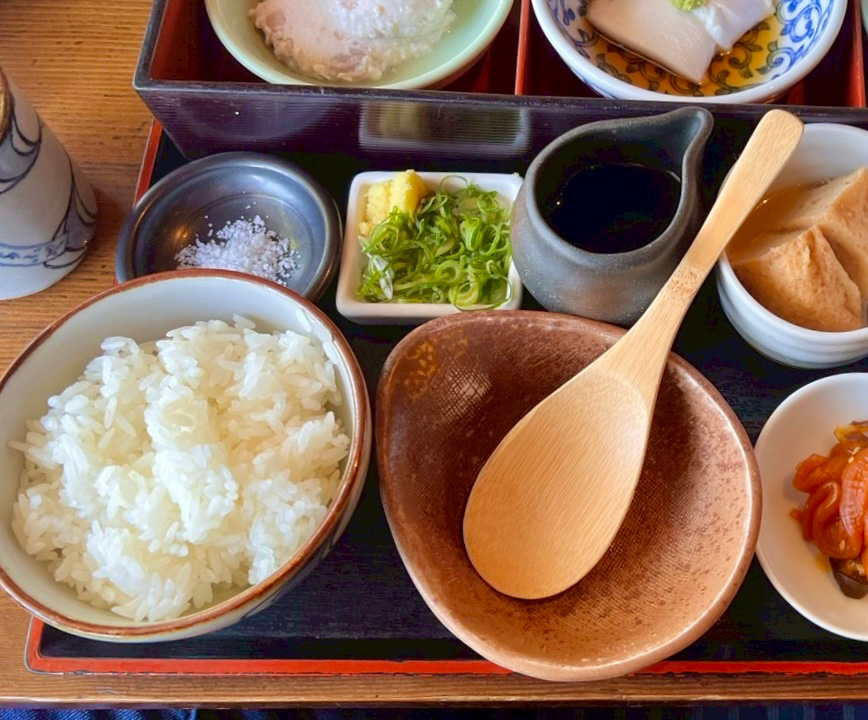
- Plain steamed rice
- Sushi rice
- Onigiri
- Donburi, curry rice, fried rice
Key trait:
Tender but separable — designed to be eaten as rice, can be pounded to make rice cake such as Goheimochi
Mochi Rice(Glutinous Rice /もち米)
What it is:
A special short-grain rice used primarily for sweets and celebratory foods.
(Despite the English term “glutinous,” it contains no gluten.)
Starch composition:
- Nearly 100% amylopectin
- Very little to no amylose
Texture when cooked:
- Extremely sticky and cohesive
- Elastic, stretchy, and chewy
- Hardens when cold but softens again when reheated
Flavor:
Subtly sweet, rich mouthfeel
Typical uses:
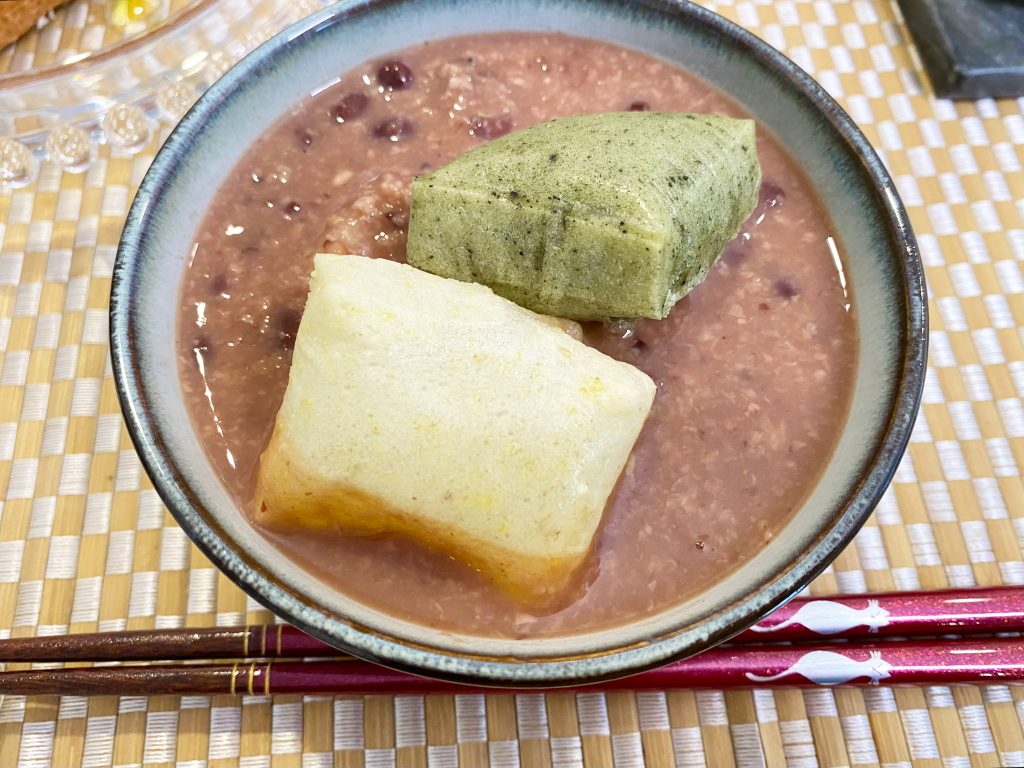
- Mochi
- Sekihan
- Okowa (sticky rice dishes)
- Rice crackers, dumplings, traditional sweets
Key trait:
Elastic and moldable — ideal for pounding, shaping, and binding.
Why They Behave So Differently (The Science)
The difference comes down to starch structure:
- Amylose (uruchi rice):
→ Creates structure, limits stickiness - Amylopectin (mochi rice):
→ Creates elasticity, chew, and stretch
This is why:
- Uruchi rice works as a daily staple
- Mochi rice turns into mochi when pounded
At-a-Glance Comparison
| Feature | Uruchi Rice | Mochi Rice |
|---|---|---|
| Starch | Amylose + amylopectin | Almost all amylopectin |
| Stickiness | Moderate | Extremely high |
| Texture | Soft, fluffy | Chewy, elastic |
| Use | Everyday meals | Sweets & special dishes |
| Interchangeable? | ❌ | ❌ |
Practical Tip for Cooking & Baking
- Uruchi rice flour → structure, lightness
- Mochi rice flour → chew, stretch, binding
They are fundamentally different and not substitutes in many recipes, even if both are “rice.”

In the photo above, uruchi rice (non-glutinous) flour and mochi rice (glutinous) flour were each mixed with equal parts water and microwaved for 30 seconds. The uruchi rice flour mixture (left) turned light and spongy, while the mochi rice flour mixture (right) became dense and sticky.
So, what about the difference between brown rice flour and white rice flour? The key distinction lies in processing: brown rice flour is milled from whole rice with the bran and germ intact, whereas white rice flour is made from rice with these layers removed. This is essentially the same relationship as whole wheat flour versus refined wheat flour, one retains the whole grain, while the other is more refined and milder in texture and flavor.
Brown Rice Flour (Whole uruchi rice flour)
Made from: Whole-grain brown rice (Uruchi rice flour/non-glutinous rice flour with bran and germ intact)
Flavor:
Nutty, earthy, slightly robust
Texture:
Coarser and heavier than white rice flour
Absorption & behavior:
- Absorbs more liquid because of the bran
- Produces denser, heartier baked goods
- Can feel slightly gritty if not finely milled
Best uses:
- Rustic or wholesome baked goods
- Cookies, muffins, quick breads
- Gluten-free blends (often combined with starches for balance)
Pros / Cons:
✔ Higher in fiber and nutrients
✖ Less delicate crumb, heavier mouthfeel
White Rice Flour (Refined uruchi rice flour)
Made from: Milled white rice (Uruchi rice flour/non-glutinous rice flour with bran and germ removed)
Flavor:
Neutral and mild
Texture:
Fine and smooth
Absorption & behavior:
- Lower absorption than brown rice flour
- Creates a lighter, cleaner crumb
- Can be slightly dry or crumbly on its own
Best uses:
- Cakes, cookies, crackers
- Sauces and batters as a thickener
- Gluten-free baking when combined with starches (tapioca, potato, etc.)
Pros / Cons:
✔ Light color and neutral taste
✖ Often requires binding support in baking
Brown Short-Grain Sweet Rice Flour(Whole mochi rice flour)
Made from:
Whole-grain glutinous (mochi) rice, with bran and germ intact
Flavor:
Nutty, earthy, deeper rice flavor
Texture:
- Slightly coarser, even when finely milled
- Chewy but a bit less smooth
Behavior when heated:
- Still elastic and chewy (high amylopectin)
- Bran interferes slightly with stretch and gloss
- Absorbs more liquid
Color:
Light beige to tan
Best uses:
- Rustic or wholesome mochi desserts
- Chewy cookies, brownies, snack bars
- Recipes where flavor depth is desired
Pros / Cons:
✔ Higher fiber and nutrients
✖ Less smooth, less glossy mochi texture
Short-Grain Sweet Rice Flour(Refined mochi rice flour)
Made from:
Refined glutinous (mochi) rice, bran removed
Flavor:
Clean, mild, subtly sweet
Texture:
- Ultra-fine and silky
- Produces very smooth dough
Behavior when heated:
- Maximum elasticity and stretch
- Shiny, cohesive, classic mochi chew
- More predictable hydration
Color:
Pure white
Best uses:
- Traditional mochi, daifuku, dango
- Soft, chewy cakes and desserts
- Recipes where appearance and smoothness matter
Pros / Cons:
✔ Ideal mochi texture and elasticity
✖ Less fiber than brown version
Key Differences at a Glance
| Flour Type | Rice Variety | Texture in cooking | Main Characteristic |
|---|---|---|---|
| Brown Rice (uruchi rice) Flour | Whole non-glutinous rice | Dense, hearty | Nutty flavor, high fiber |
| White Rice (uruchi rice) Flour | Refined non-glutinous rice | Light, delicate | Neutral, versatile |
| Brown Sweet Rice (mochi rice) Flour | Whole glutinous short-grain rice | Chewy, elastic, hearty | Stretchy, binding, nutty, high fiber |
| White Sweet Rice (mochi rice) Flour | Refined glutinous short-grain rice | Chewy, delicate | Stretchy, binding, neutral, versatile |
Practical Tip
These flours are not direct substitutes for one another.
- Swap brown ↔ white rice flour cautiously, adjusting liquid.
- In most recipes, you cannot replace non-glutinous rice (uruchi rice) flour with glutinous rice (mochi rice) flour.
Source – Wikipedia Glutinous rice

Nut Butter Cocoa Cookies recipe (Vegan and Gluten-free)
Equipment
- Baking sheet
- Parchment paper or Silpain
Ingredients
- 100 g (1/3 cup) Nut butter I used tahini this time
- 20 g (3 tbsp) Powdered sugar
- 35 g (1 tbsp + 2 tsp) Maple syrup
- 0.5 g (a pinch) Salt
- 35 g (1/3 cup) Brown rice flour
- 10 g (2 tbsp) Cocoa powder
NOTE: For best results, measure ingredients with a scale using grams. Cup measurements (US customary units) are provided for your convenience but are not always accurate.
Instructions
- Preheat the oven to 175°C (350°F).

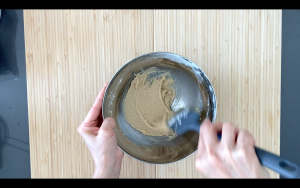
- Combine the nut butter, sifted powdered sugar, maple syrup, and salt together.
- Combine and sift the brown rice flour and cocoa powder together.
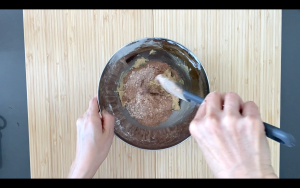
- Add the sifted powder to the nut butter mixture and mix until well combined and uniform.
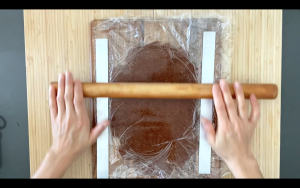
- Roll the dough between 2 pieces of plastic wrap until the thickness is 3 mm.
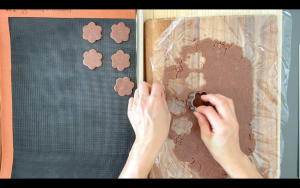
- Cut out the cookie dough with a cookie cutter and place them on a baking pan with either a Silpain or a baking liner.
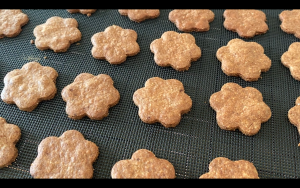
- Bake them for about 10 minutes, or until the surface becomes slightly darker.


Notes
- You can use any type of nut butter. This time, I used tahini. Make sure to use pure nut butter without any additives such as salt, sugar, and oil.
- These cookies can be kept in an airtight container in a room temperature for up to a few weeks.
For the latest recipes and food articles:
Discover more from Kitchen Porcupine
Subscribe to get the latest posts sent to your email.





I bought vanilla ice cream and sandwiched it with these cookies!!! Super goooood!!! Who doesn’t love ice cream sandwiches, and they’re much healthier, too!
That sounds delicious! If you use chocolate ice cream, it’ll be a double chocolate ice cream sandwich! Yum!