


Healthier oils comparison
In my last article, I explained why I always avoid using shortening and vegan butter. This time, I’d like to take a deeper dive into what makes an oil a healthier choice, exploring the reasons behind it and how to choose better oils with confidence.
What defines healthy oil?
A healthy oil is defined by a mix of nutrition, stability, and how it’s used.
Here are the main factors:
1. Fatty Acid Composition (the most important factor)
Not all fats act the same in the body.
Health-supportive fats
- Monounsaturated fats (MUFA)
→ Support heart health, reduce LDL oxidation
→ Found in olive oil, avocado oil - Omega-3 polyunsaturated fats
→ Anti-inflammatory, support brain & heart health
→ Found in flaxseed, walnut, perilla oil
Less ideal when dominant
- Omega-6 polyunsaturated fats (PUFA)
→ Essential, but excessive amounts may promote inflammation
→ Common in corn, soybean, generic vegetable oils
Least healthy
- Trans fats (industrial hydrogenation)
→ Increase heart disease risk
→ Found in shortening, some margarines
Healthy oils are usually high in MUFA or balanced in omega-3s.
2. Oxidative Stability (how it handles heat & time)
When oils break down, they form harmful compounds.
A healthy oil:
- Resists oxidation
- Produces fewer toxic byproducts when heated
What improves stability?
- Higher monounsaturated fat
- Lower polyunsaturated fat
- Presence of antioxidants (polyphenols, vitamin E)
This is why EVOO, despite a moderate smoke point, performs well in real cooking.
3. Smoke Point (important but often misunderstood)
Smoke point = when oil visibly smokes.
- Smoking oil = nutrients destroyed + toxic compounds form
- But higher smoke point ≠ healthier oil
Example:
- Refined vegetable oil → high smoke point, low nutrition
- EVOO → slightly lower smoke point, but rich in protective antioxidants
A healthy oil should be used within its appropriate heat range.
4. Degree of Processing
Less processing usually means more nutrients.
Healthier:
- Cold-pressed
- Extra virgin
- Unrefined
Less healthy:
- Chemically refined
- Deodorized
- Bleached
Refining improves heat tolerance but strips antioxidants.
5. Presence of Bioactive Compounds
Beyond fat, some oils actively protect health.
Examples:
- Polyphenols (EVOO) → anti-inflammatory, antioxidant
- Lignans (sesame oil)
- Phytosterols → help lower cholesterol absorption
A healthy oil contributes more than calories.
6. How the Oil Is Used (context matters)
An oil is only “healthy” if used correctly.
- Flaxseed oil + frying = ❌
- EVOO + salad = ⭐⭐⭐
- Refined avocado oil + deep frying = ✅ (occasionally)
Misuse turns even good oil into a bad one.
Simple Definition
A healthy oil is one that:
- Is rich in stable, beneficial fats
- Resists oxidation at its intended temperature
- Is minimally processed
- Contains protective compounds
- Is used in the right cooking context

Which oils are best suited for which cooking methods?
Deep Frying (high heat, long exposure)
Best choices:
- Refined avocado oil
- Refined peanut oil
- Refined high-oleic sunflower or safflower oil
Why:
- Very high smoke points (230–270°C / 450–520°F)
- High in monounsaturated fats, which are more heat-stable
- Less oxidation → fewer harmful compounds
Avoid:
- Extra virgin olive oil (nutrients degrade)
- Butter, unrefined oils, flaxseed oil
Health note: Even with good oils, deep frying should be occasional; heat + time still stresses any fat.
Baking (moderate heat, texture matters)
Best choices:
- Extra virgin olive oil (EVOO)
- Avocado oil
- Light olive oil (refined)
- Neutral oils like grapeseed (in moderation)
Why:
- EVOO is rich in polyphenols and antioxidants
- Works beautifully in cakes, muffins, scones, and quick breads
- Adds moisture and tenderness without needing butter
Tip: Use EVOO for flavorful baked goods (chocolate, citrus, spice cakes). Use neutral oils when you don’t want olive flavor.
Cooking & Sautéing (low–medium heat)
Best choices:
- Extra virgin olive oil
- Avocado oil
- Sesame oil (for finishing or gentle heat)
Why:
- EVOO is incredibly heart-healthy and surprisingly stable up to ~190–210°C
- Rich in oleic acid + antioxidants
- Excellent for everyday cooking, vegetables, grains, and sauces
Avoid overheating EVOO until it smokes; gentle to medium heat is the sweet spot.
Dressings & No-Heat Use (where quality shines)
Best choices:
- Extra virgin olive oil ⭐⭐⭐
- Flaxseed oil
- Walnut oil
- Perilla oil
Why:
- These oils are rich in omega-3s and polyphenols
- Extremely sensitive to heat → best used raw
- Deliver maximum flavor and nutrition
Store omega-3–rich oils in the fridge and use quickly.
Quick Rule of Thumb
- High heat = refined, stable oils
- Medium heat = EVOO or avocado oil
- No heat = fresh, unrefined oils
Comparison of cooking fats
| Type of fat | Total fat (g) | Saturated fat (g) | Monounsaturated fat (g) | Polyunsaturated fat (g) | Smoke point |
|---|---|---|---|---|---|
| Butter | 81 | 51 | 21 | 3 | 150 °C (302 °F) |
| Canola oil | 100 | 6–7 | 62–64 | 24–26 | 205 °C (401 °F) |
| Coconut oil | 99 | 83 | 6 | 2 | 177 °C (351 °F) |
| Corn oil | 100 | 13–14 | 27–29 | 52–54 | 230 °C (446 °F) |
| Lard | 100 | 39 | 45 | 11 | 190 °C (374 °F) |
| Peanut oil | 100 | 16 | 57 | 20 | 225 °C (437 °F) |
| Olive oil | 100 | 13–19 | 59–74 | 6–16 | 190 °C (374 °F) |
| Rice bran oil | 100 | 25 | 38 | 37 | 250 °C (482 °F) |
| Soybean oil | 100 | 15 | 22 | 57–58 | 257 °C (495 °F) |
| Suet | 94 | 52 | 32 | 3 | 200 °C (392 °F) |
| Ghee | 99 | 62 | 29 | 4 | 204 °C (399 °F) |
| Sunflower oil | 100 | 10 | 20 | 66 | 225 °C (437 °F) |
| Sunflower oil (high oleic) | 100 | 12 | 84 | 4 | |
| Vegetable shortening | 100 | 25 | 41 | 28 | 165 °C (329 °F) |
Smoke point of cooking oils
| Fat | Quality | Smoke point | |
|---|---|---|---|
| Almond oil | 221 °C | 430 °F | |
| Avocado oil | Refined | 271 °C | 520 °F |
| Avocado oil | Virgin (unrefined) | 200 °C | 392 °F |
| Avocado oil | Extra virgin (unrefined) | 250 °C | 482 °F |
| Beef tallow | 250 °C | 480 °F | |
| Butter | Unrefined | 150 °C | 302 °F |
| Butter, clarified (ghee) | Clarified | 250 °C | 482 °F |
| Castor oil | Refined | 200 °C | 392 °F |
| Coconut oil | Refined, dry | 204 °C | 400 °F |
| Coconut oil | Unrefined, dry expeller pressed, virgin | 177 °C | 350 °F |
| Corn oil | 230–238 °C | 446–460 °F | |
| Corn oil | Unrefined | 178 °C | 352 °F |
| Cottonseed oil | Refined, bleached, deodorized | 220–230 °C | 428–446 °F |
| Flaxseed oil | Unrefined | 107 °C | 225 °F |
| Grapeseed oil | 216 °C | 421 °F | |
| Lard | 190 °C | 374 °F | |
| Mustard oil | 250 °C | 480 °F | |
| Olive oil | Refined | 199–243 °C | 390–470 °F |
| Olive oil | Virgin | 210 °C | 410 °F |
| Olive oil | Extra virgin, low acidity, high quality | 207 °C | 405 °F |
| Olive oil | Extra virgin | 190 °C | 374 °F |
| Palm oil | Fractionated | 235 °C | 455 °F |
| Peanut oil | Refined | 232 °C | 450 °F |
| Peanut oil | 227–229 °C | 441–445 °F | |
| Peanut oil | Unrefined | 160 °C | 320 °F |
| Pecan oil | 243 °C | 470 °F | |
| Rapeseed oil (Canola) | 220–230 °C | 428–446 °F | |
| Rapeseed oil (Canola) | Expeller press (unrefined) | 190–232 °C | 375–450 °F |
| Rapeseed oil (Canola) | Refined | 204 °C | 400 °F |
| Rice bran oil | Refined | 232 °C | 450 °F |
| Safflower oil | Unrefined | 107 °C | 225 °F |
| Safflower oil | Semirefined | 160 °C | 320 °F |
| Safflower oil | Refined | 266 °C | 510 °F |
| Sesame oil | Unrefined | 177 °C | 350 °F |
| Sesame oil | Semirefined | 232 °C | 450 °F |
| Soybean oil | 234 °C | 453 °F | |
| Sunflower oil | Neutralized, dewaxed, bleached & deodorized | 252–254 °C | 486–489 °F |
| Sunflower oil | Semirefined | 232 °C | 450 °F |
| Sunflower oil | 227 °C | 441 °F | |
| Sunflower oil | Unrefined, first cold-pressed, raw | 107 °C | 225 °F |
| Sunflower oil, high oleic | Refined | 232 °C | 450 °F |
| Sunflower oil, high oleic | Unrefined | 160 °C | 320 °F |
| Vegetable oil blend | Refined | 220 °C | 428 °F |
Resource – Cleveland Clinic “healthy cooking oils”
Wikipedia – Comparison of cooking fats
Wikipedia – Smoke point of cooking oils
This time, I’d like to introduce a vegan muffin recipe made with extra virgin olive oil, vegan yogurt, and blueberries. The yogurt cream, which is prepared simply by straining excess moisture from the yogurt adds a rich, velvety creaminess to these soft, delicate blueberry muffins, complemented by a lemon-kissed blueberry compote. Packed with protein and antioxidants, they’re perfect for a nourishing breakfast or a satisfying afternoon snack.

Vegan Blueberry Yogurt Muffins
Equipment
- 12 cup 3.5 oz muffin pan (7cm | 2.8" in diameter)
- Baking cups
Ingredients
Vegan yogurt cream
- 220g (1 cup) Vegan yogurt
Easy blueberry compote
- 100g (3/4 cup) Blueberries
- 10g ( 2 1/2 tsp) Sugar
- 10g (2 tsp) Lemon juice
Muffin batter
- 360g (1 1/2 cups) Vegan yogurt
- 120g (1/2 cup + 2 tbsp) Sugar
- 120g (1/2 cup + 1 tbsp) EVOO
- 230g (1 3/4 cups + 2 tbsp) Pastry flour
- 70g (1/2 cup + 1 tbsp) Corn starch
- 8g (2 tsp) Baking powder
- 4g (3/4 tsp) Baking soda
NOTE: For best results, measure ingredients with a scale using grams. Cup measurements (US customary units) are provided for your convenience but are not always accurate.
Instructions
Vegan yogurt cream
- Wrap vegan yogurt with a few sheets of kitchen paper on a sieve.

- Place a weighted object such as a cup and leave it in a refrigerator over night until the yogurt becomes about 180g.


Easy blueberry Compote
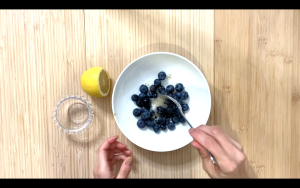
- Combine blueberries, sugar, and lemon juice in a bowl.
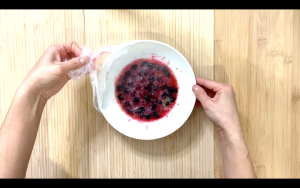
- Cover the bowl with a plastic wrap and microwave it for 1 minute until the blueberries are soft and the mixture becomes syrupy. Set it aside.
Muffin batter
- Preheat the oven to 175°C (350°F).
- Line a muffin tin with paper liners.
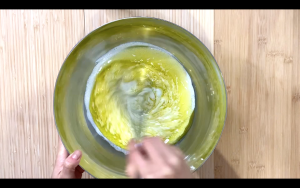
- In a bowl, combine vegan yogurt, sugar, and EVOO.
- In a separate bowl, sift together flour, corn starch, baking powder, and baking soda.
- Add the dry ingredients to the wet mixture and fold gently with a spatula until well combined. Do not over mix.
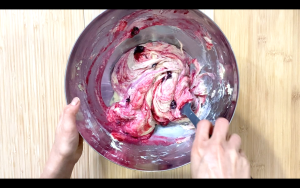
- Fold in the blueberry compote gently.
- Using an ice cream scoop, fill each muffin cup with batter evenly.
- Spoon the vegan yogurt cream on top of each muffin.
- Bake them for about 35 minutes, or until the toothpick inserted in the center comes out clean.
- Let the muffins cool and remove from the pan.
- Dust the muffins with powdered sugar.









Notes
- You can use any type of plant based yogurt. I used coconut yogurt this time.
- These muffins can be stored in the refrigerator for up to 3 days.
- To keep them longer, wrap with plastic wrap individually, and freeze them up to a few months.
For the latest recipes and food articles:
Discover more from Kitchen Porcupine
Subscribe to get the latest posts sent to your email.





I love the combination of blueberries, lemon, and yogurt. I’m surprised how easy it is to make blueberry compote in a microwave! I made a dozen and froze them so that I can eat them when I don’t have time to prepare breakfast.
Yes, these muffins can be a great breakfast item as it’s packed with protein and quick to eat. Making a dozen on a weekend and grab them in the morning is a great idea!