
Why I avoid shortening and vegan butter
The oil I most often use for everyday cooking, including baking, is extra virgin olive oil. I’m drawn to it not only for its fresh, grassy aroma and gentle spiciness, but also for the many health benefits it offers.
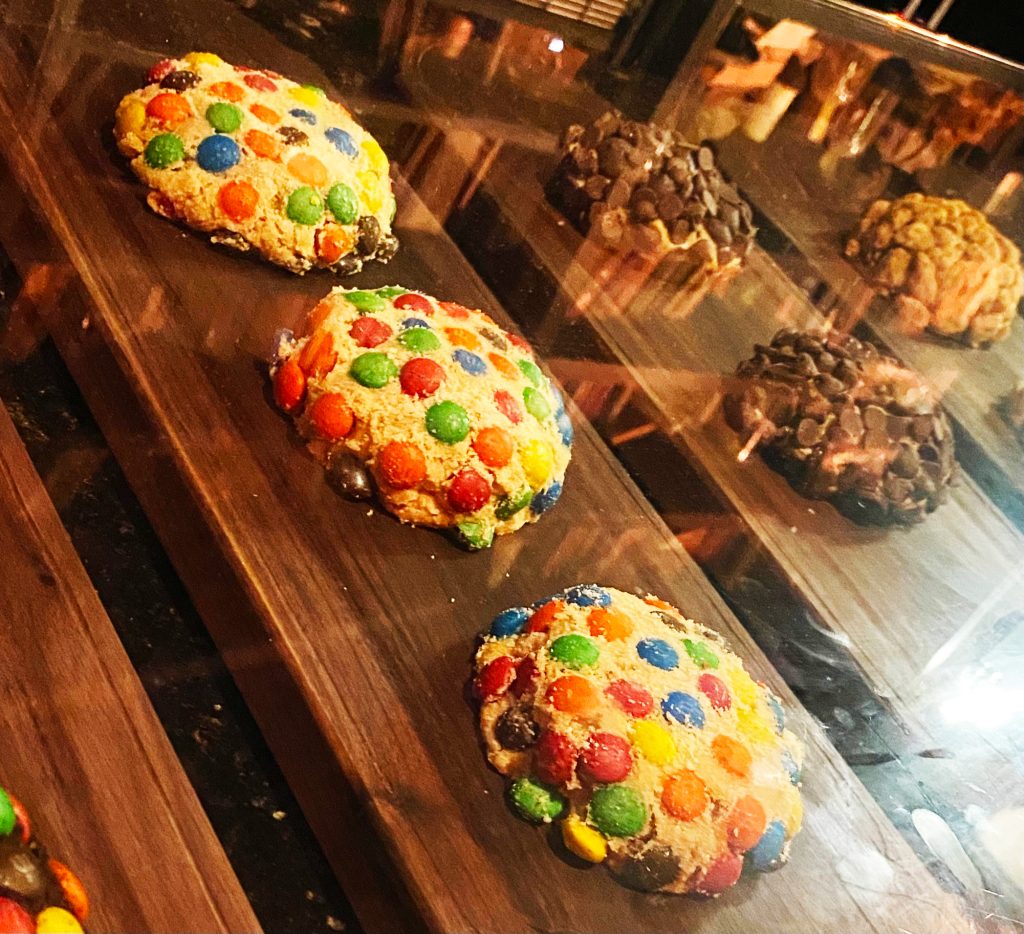
In vegan baking, shortening or vegan butter is often considered more convenient, but I deliberately avoid shortening. As you may already know, shortening is widely regarded as one of the least healthy fats due to the way it’s processed and the negative effects it can have on the body. Below is a clear breakdown.
Why I avoid shortening
1. It’s high in trans fats (or acts like them)
Traditional shortening is made by hydrogenating vegetable oils to make them solid at room temperature. This process creates trans fats, which are among the most harmful fats for human health.
Even though many products are now labeled “0 g trans fat,” they can still legally contain small amounts per serving, and these add up.
Trans fats:
- Raise LDL (bad) cholesterol
- Lower HDL (good) cholesterol
- Increase risk of heart disease and stroke
The World Health Organization (WHO) has called for the global elimination of industrial trans fats because there is no safe level of consumption.
2. Increases inflammation in the body
Shortening is typically made from refined vegetable oils (such as soybean, cottonseed, or palm oil). These oils:
- Are highly processed
- Often high in omega-6 fatty acids without balancing omega-3s
Excess omega-6 intake can promote chronic inflammation, which is linked to:
- Heart disease
- Type 2 diabetes
- Arthritis
- Certain cancers
3. Contributes to heart disease
Because shortening:
- Raises bad cholesterol
- Promotes inflammation
- Damages blood vessels
Regular consumption is strongly associated with atherosclerosis (plaque buildup in arteries), increasing the risk of heart attacks and strokes.
4. Highly processed and nutrient-poor
Shortening is:
- Almost 100% fat
- Lacking vitamins, minerals, fiber, or antioxidants
- Stripped of beneficial compounds during processing
This makes it a calorie-dense but nutritionally empty food.
5. Linked to insulin resistance and metabolic issues
Studies show that diets high in trans fats and refined fats can:
- Worsen insulin sensitivity
- Increase abdominal fat
- Raise risk of type 2 diabetes
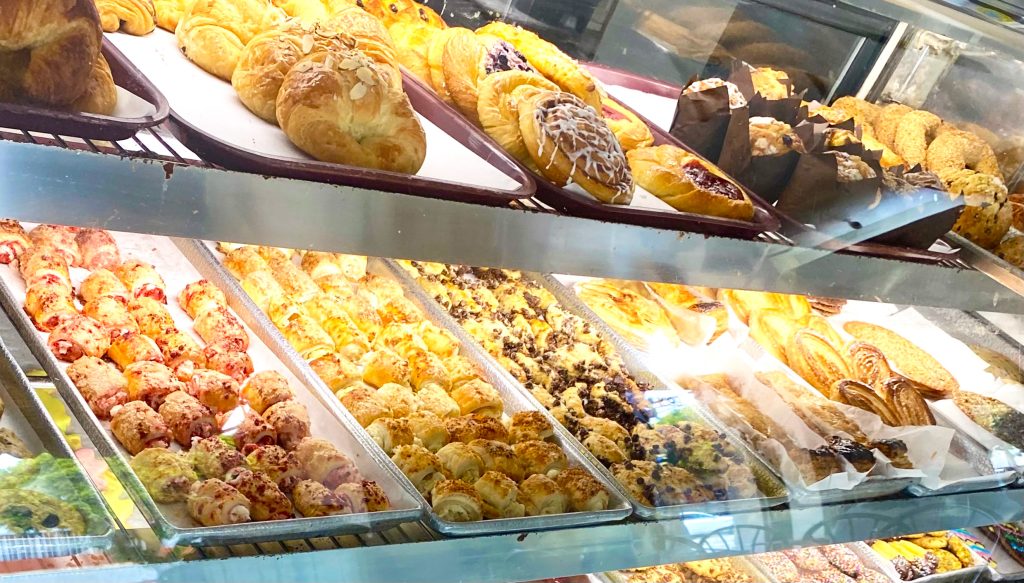
As for vegan butter, although some vegan butters can be a better choice than others, I’m skeptical to use it. Here’s how to evaluate it clearly.
Why I’m skeptical about vegan butter
What vegan butter usually is
Most vegan butters are made from a blend of:
- Vegetable oils (canola, sunflower, olive, coconut, palm, etc.)
- Water
- Emulsifiers
- Flavoring and salt
They’re designed to behave like dairy butter in baking and cooking.
When vegan butter can be a reasonable choice
Vegan butter may be healthier than dairy butter if it:
- Contains no hydrogenated or partially hydrogenated oils
- Has 0 g trans fat
- Uses oils like olive, canola, or sunflower
- Is used occasionally, not as a primary fat source
When vegan butter is not very healthy
Many vegan butters are still ultra-processed and can be problematic if they:
- Are high in saturated fat (especially coconut or palm oil–based)
- Contain refined oils with little nutritional value
- Rely on palm oil (linked to environmental and health concerns)
- Are used frequently or in large amounts
Some vegan butters can be nutritionally empty, similar to shortening, just with a better public image.
Saturated fat still matters
Even though it’s plant-based, high saturated fat intake:
- Raises LDL (bad) cholesterol
- Increases cardiovascular risk
Coconut oil–heavy vegan butters can contain as much saturated fat as dairy butter.
Better oil options
For everyday cooking, better options are:
- Extra virgin olive oil
- Avocado oil
- Nuts and seeds oils such as almond oil, walnut oil, sesame oil, pumpkin seed oil, sunflower oil, flaxseed oil, etc
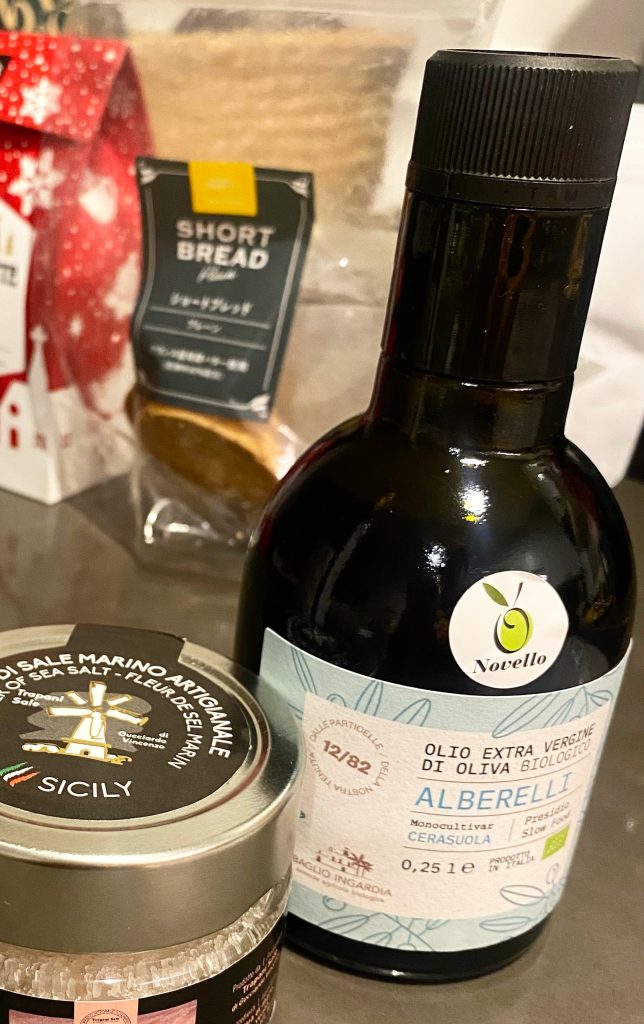
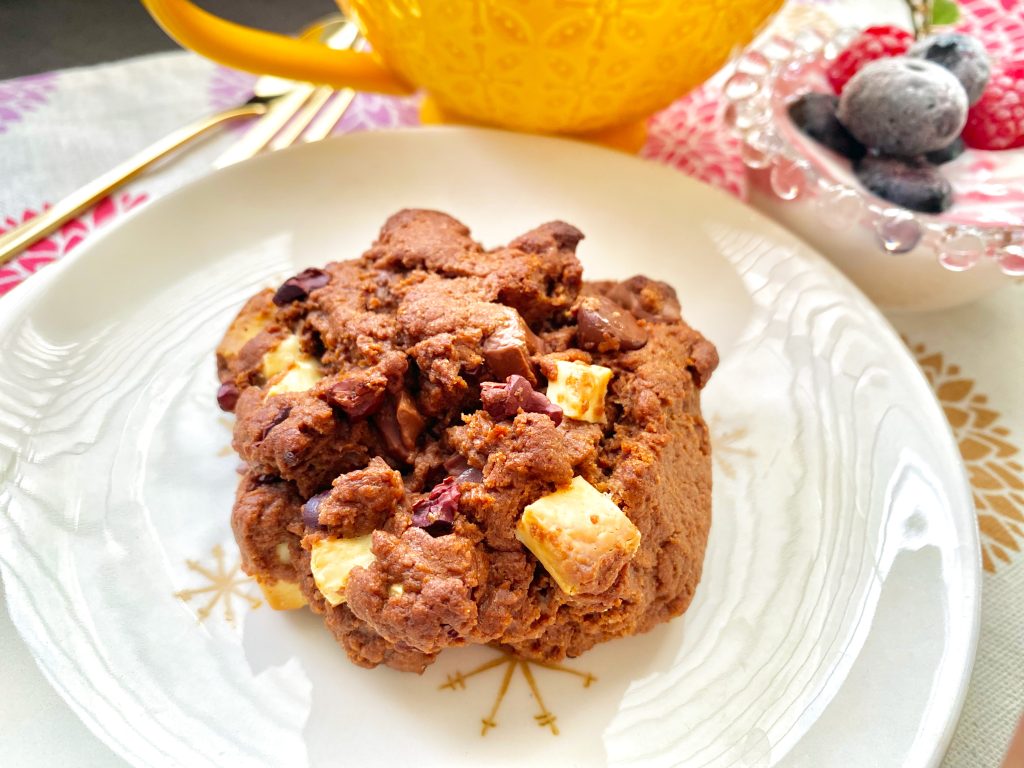
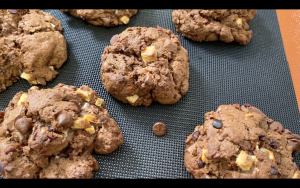
I’ll dive deeper into each oil next time. For now, I’d like to introduce these delicious triple chocolate scones made with extra virgin olive oil. They’re crumbly and flaky on the outside, yet soft and moist on the inside, filled with a generous amount of three different types of chocolate chips and cacao nibs. Decadent and deeply satisfying, they’re surprisingly light and rich in antioxidants from both the EVOO and the cacao.
Resource – Cleveland Clinic – healthy cooking oils
Wikipedia – shortening

Vegan Triple Chocolate Scones
Equipment
- Baking sheet
- Parchment paper or Silpain
Ingredients
- 280g ( 2 1/4 cups) Flour
- 40g (1/3 cup) Cocoa powder
- 8g (2 tsp) Baking powder
- 4g (3/4 tsp) Baking soda
- 120g (1/2 cup + 1 tbsp) Extra Virgin Olive Oil
- 120g (1/2 cup) Plant based yogurt I used coconut yogurt this time
- 80 g (1/3 cup + 1 tbsp) Coconut sugar
- 120 g (3/4 cup) Mixture of chocolate/ chocolate chips (I used equal amounts of 50%, 74%, and vegan white chocolate this time
- 20g (3 tbsp) Cacao nibs
NOTE: For best results, measure ingredients with a scale using grams. Cup measurements (US customary units) are provided for your convenience but are not always accurate.
Instructions
- Preheat the oven to 190°C (375°F) and line a baking tray with parchment paper or Silpain.

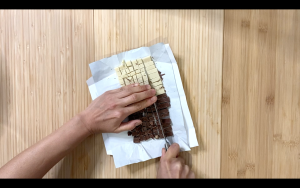
- Chop the chocolate into small pieces. You can also use chocolate chips.
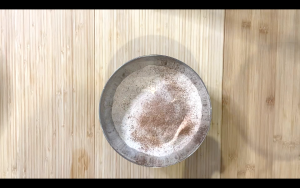
- Sift the flour, cocoa powder, baking powder, and baking soda together.
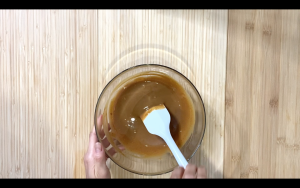
- In a bowl, combine the plant-based yogurt and coconut sugar and mix until the coconut sugar is fully dissolved.
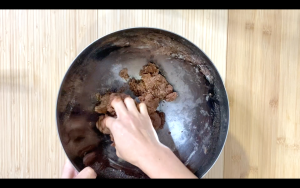
- Add EVOO to the flour mixture and combine until they’re uniform.
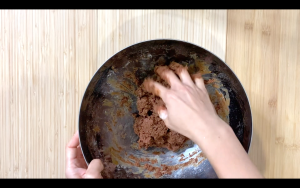
- Add the yogurt mixture and combine together.
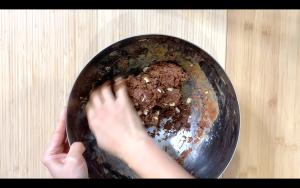
- Fold in the chopped chocolate or chocolate chips and cacao nibs.
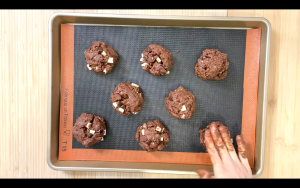
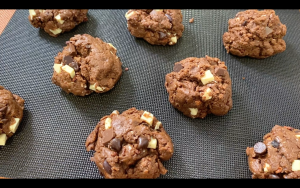
- Divide the dough into 8 and shape them into small balls and place them on a baking sheet.
- Do not make the balls too smooth. The rough surface is the key to the crumbly texture.
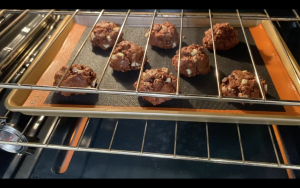
- Bake them in the oven at 190°C (375°F) for about 23 mins.
- Allow the scones to cool slightly before serving. They’re best enjoyed warm!

Notes
- These scones can be stored in the room temperature for up to 3 days. For the best taste and texture, warm them slightly before serving.
- If you want to keep them longer, wrap them individually with plastic wrap and freeze them for up to a few months.
- You can use any type of plant-based yogurt. This time, I used coconut yogurt.
- You can substitute the chocolate chips with ingredients such as pecans, macadamia nuts, dried strawberries, or dried banana chips.
For the latest recipes and food articles:
Discover more from Kitchen Porcupine
Subscribe to get the latest posts sent to your email.



I also agree that I see more and more vegan products on store shelves but many of them have highly processed ingredients, and whether they’re healthy or not is questionable. I love that this recipe calls for EVOO instead of vegan butter!:-)
Yes! At the end of the day, the simpler the ingredients, the better. Many of my vegan recipes use EVOO, and it surprisingly goes well with a wide variety of ingredients.:-)